
Whole-home backup power, ready before you need it.
When the power drops, a properly installed standby system keeps the lights, heat, fridge and the rest of your home running — automatically.
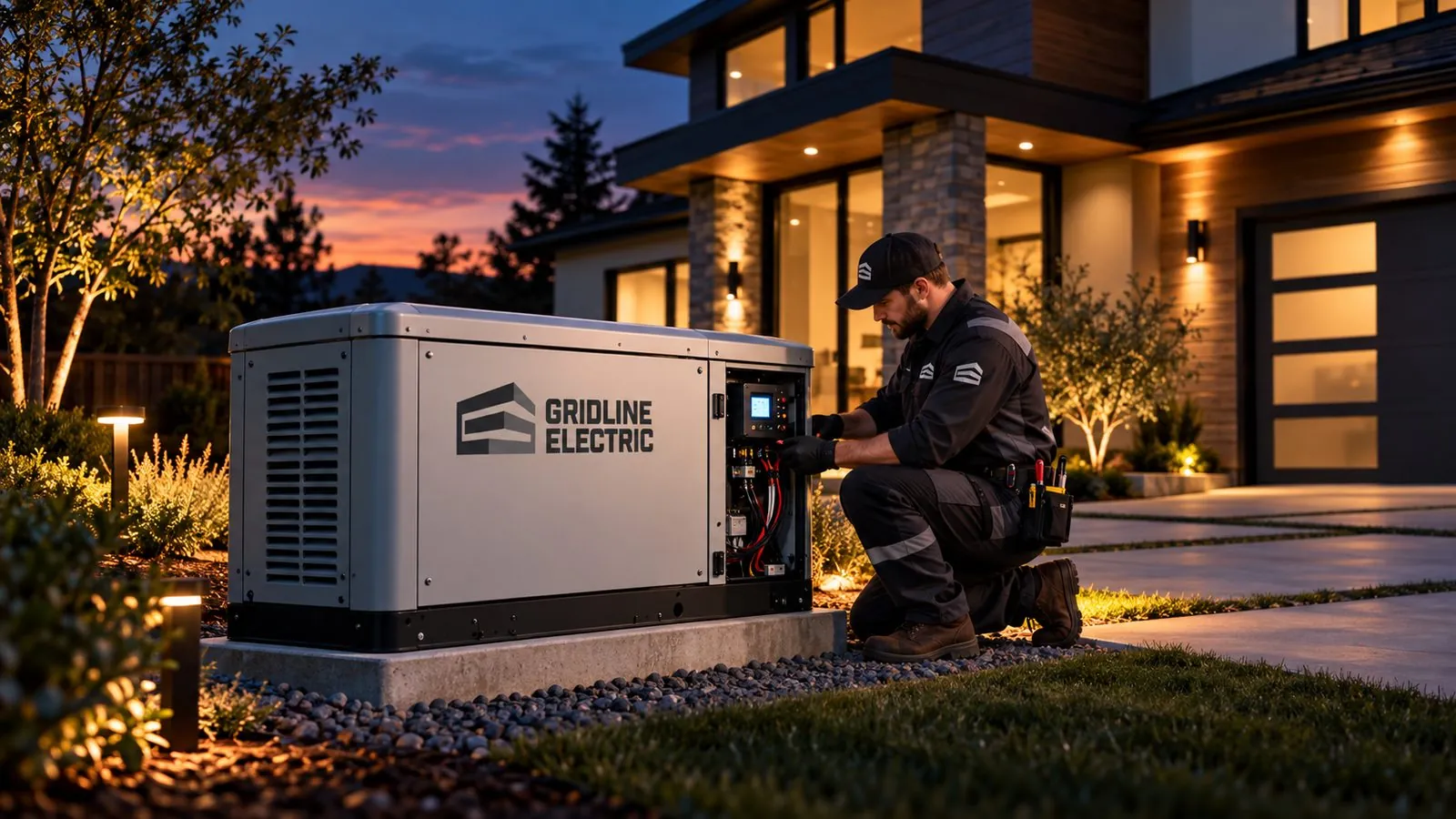
How a whole-home system works
A standby generator is wired into your home through an automatic transfer switch. When utility power fails, the switch isolates your home from the grid and starts the generator; when power returns, it switches back. There are no extension cords and no manual changeover.
Getting it right is mostly about the electrical design: the size of the generator, which circuits it carries, and a transfer switch that meets code. That is where we come in.
What is included
- Assessment of your home’s electrical load and what you want to keep running
- Generator sizing guidance so you do not over- or under-buy
- Automatic transfer switch supply and installation
- Electrical connection from generator to panel, to code
- Permit and inspection handled for you where required
- Coordination with a licensed gas fitter where a gas-fuelled unit needs a fuel connection
Partial backup or whole home
You do not have to back up everything. Some homeowners choose essential circuits only, others a true whole-home system. We will lay out the options and the trade-offs so you can choose with confidence.
Common questions
What happens when the power comes back?
The transfer switch automatically returns your home to utility power and the generator shuts down.
Do you handle the gas connection?
The electrical side is ours. A gas-fuelled generator needs its fuel connection made by a licensed gas fitter, and we can coordinate that.
Can a generator run my whole house?
It depends on its size and your home’s load. We size the system to what you actually want to keep running.
Need an electrician in Greater Vancouver?
Tell us what you need. We will get back to you quickly with a clear, upfront quote.